It is never advisable to hike any mountain solo, simply because there is no one with you to help or to get help, if you have an accident.
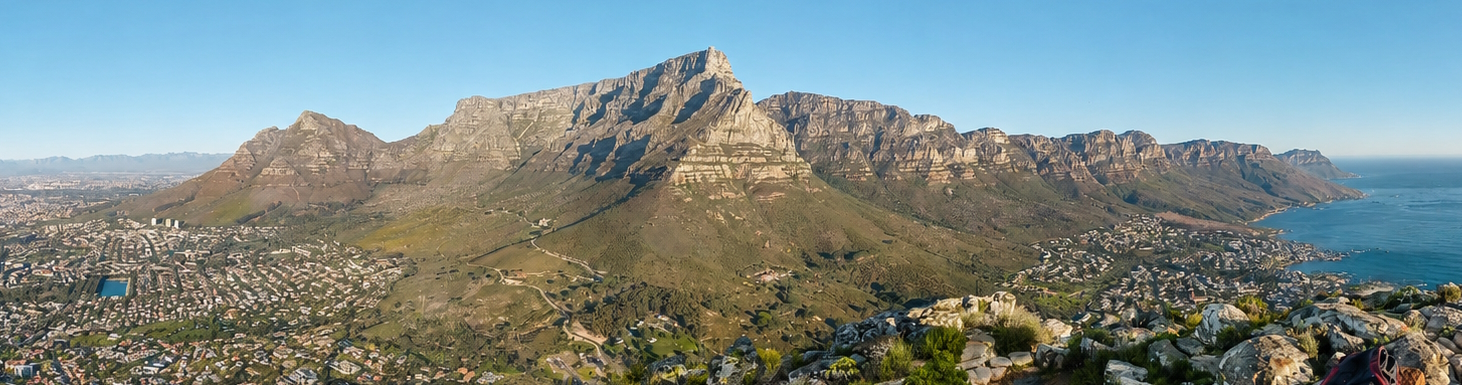
Table Mountain is very close and accessible, so many visitors are fooled into thinking 'this is easy'; but every year the metro's rescue services are called out and every year the mountain claims a few lives.
It is no coincidence that most accidents have happened on the two most popular hikes in the city - Lions Head and Platteklip Gorge on Table Mountain.
Since 2000, no less than 38 people have died on just these two 'easy' hiking routes. In the last year, the Wilderness Search and Rescue service (WSAR) has been called out 109 times.
The summit of Table Mountain is 1087m above sea-level (1069m at the upper cable station), so whichever route you choose to go, you have to ascend approximately 700m vertical metres.
Hiking up the front face, you're looking at 2-3.5hrs, while from the eastern or western sides, you're looking at 4-6hrs.
Most visitors to Cape Town, think of hiking as following a 'trail' that has been cleared and is maintained for human usage. It's not like that.
Because Table Mountain is so wide and flat on top, the contour path around the base of the mountain makes numerous approaches (routes) accessible; all pioneered by amateur hiking and rock-climbing enthusiasts. Those paths have been created over the years, by continued human usage, but very few of them have ever been sign-posted or maintained.
There are five routes on the front face of the mountain, but only two of them are sign-posted and only Platteklip Gorge is graded an 'A' (easiest), yet it is that route that has claimed 17 of the 38 lives.
The other four are 'scrambling' rather than 'hiking' routes, on which you will be exposed to cliff-edges and will have to use your hands to hang on, or climb up short rock faces - yes, your 'hike' has suddenly turned into a climb.
So, how does the easiest route on Table Mountain claim the most lives? ... a failure to understand the terrain and conditions, or your own fitness; and a lack of preparation, resulting in dehydration, heatstroke, fatigue.
Dehydrated, over-heated and tired hikers are more prone to slipping on rocks, or falling off paths; especially if you don't have appropriate footwear - you shouldn't go hiking Table Mountain in flip-flops or high-heels!

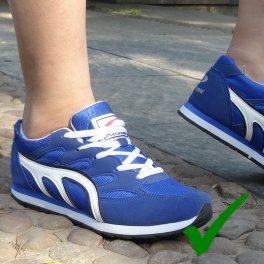
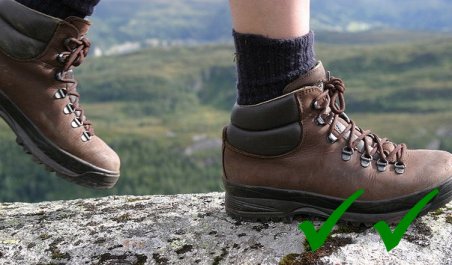
And while you started out in warm 23°C temperatures, don't be surprised to be suddenly freezing cold, at the top.
Another thing to consider are the crime-related incidents, of which there have been 71 in the last year; but these mostly happen on the lower slopes, around Signal Hill and Rhodes Memorial.
If you insist on setting out alone, then at the very least make sure that you understand the potential dangers and minimise the risks you might encounter:
 Most importantly, know where you are going and the route that is going to get you there - you must have the expertise and experience to use a map and compass, or a GPS receiver ... if not, BOOK A GUIDE!